
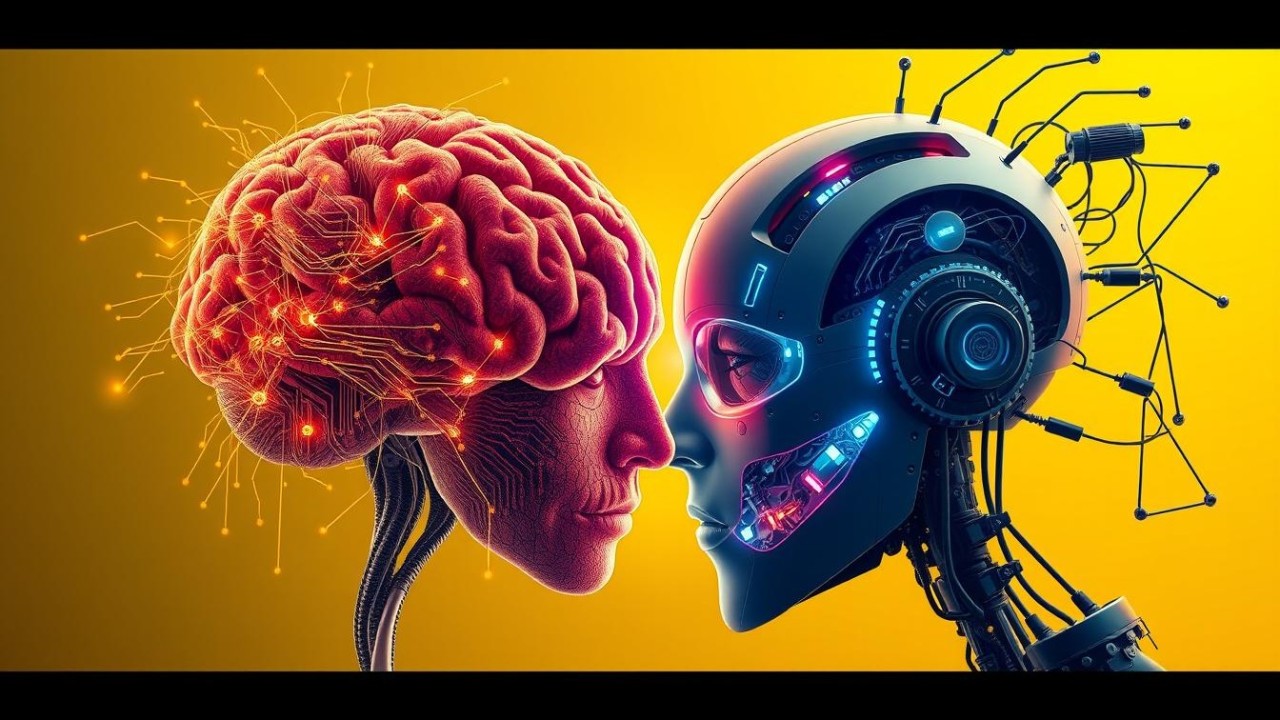
Artificial Intelligence vs Human Intelligence: Key Differences
Artificial Intelligence (AI) and Human Intelligence are often compared as technology becomes more advanced. While AI systems can perform tasks that once required human thinking, they operate very differently from the human mind. Understanding these differences helps us better appreciate both the power of machines and the uniqueness of human intelligence.
What Is Artificial Intelligence?
Artificial Intelligence refers to machines or software designed to perform tasks that typically require human intelligence. These tasks include data analysis, speech recognition, image processing, and decision-making. AI systems rely on algorithms, data, and computational power to learn patterns and produce results efficiently.
What Is Human Intelligence?
Human intelligence is the natural cognitive ability of humans to think, learn, reason, feel emotions, and adapt to new situations. It involves creativity, emotional understanding, moral judgment, and consciousness—qualities shaped by experiences, emotions, and social interactions.
Learning Ability
AI learns through data and training models. It improves performance by processing vast amounts of information and identifying patterns. However, it cannot truly understand context beyond its programming.
Humans learn through experiences, observation, emotions, and intuition. They can apply knowledge creatively across different situations, even with limited information.
Creativity and Innovation
AI can generate content such as images, music, or text by analyzing existing data. While impressive, this creativity is based on patterns, not originality.
Human intelligence excels in true creativity—creating new ideas, art, philosophies, and innovations driven by imagination and emotions.
Emotional Understanding
AI lacks emotions and empathy. It can recognize emotional patterns but does not feel or understand emotions.
Humans experience emotions deeply, influencing decisions, relationships, and moral values. Emotional intelligence allows humans to connect, empathize, and lead effectively.
Decision-Making and Ethics
AI decisions are rule-based and data-driven. It follows predefined instructions and lacks moral reasoning.
Humans consider ethics, values, cultural norms, and emotions when making decisions, especially in complex or sensitive situations.
Adaptability and Consciousness
AI performs well in specific tasks but struggles outside its trained scope. It has no self-awareness or consciousness.
Humans are highly adaptable and conscious, capable of abstract thinking, self-reflection, and understanding meaning beyond logic.
Strengths of AI and Human Intelligence
AI excels in speed, accuracy, consistency, and handling large datasets. Humans excel in creativity, empathy, critical thinking, and ethical judgment. Together, they can complement each other rather than compete.
Final Thoughts
Artificial Intelligence and Human Intelligence are fundamentally different. AI is a powerful tool that enhances efficiency and innovation, but it cannot replace the emotional depth, creativity, and consciousness of humans. The future lies in collaboration, where AI supports human intelligence rather than replacing it.